AI, Tech, and the Future of Career Skills: How to Stay Competitive and Adaptable
Nov 07, 2025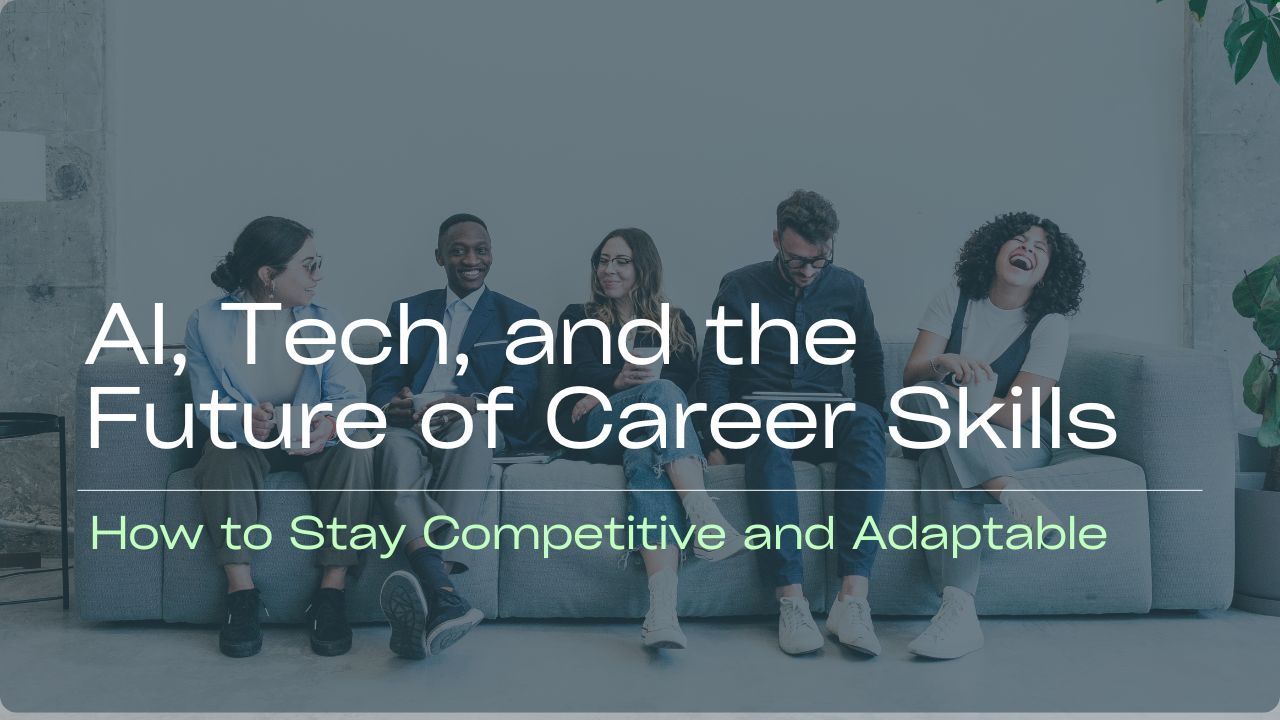
I hear from so many professionals that they feel uneasy about how AI and technology are changing the job market. It’s understandable. Roles are shifting and new skills are in demand.
The idea of a traditional career path is officially outdated.
The truth is, we’ve entered an era where adaptability and learning matter as much as experience. The people who’ll thrive will be those who stay curious, build a range of skills, and use technology as a partner in their growth, rather than a threat to it.
In my coaching work, I’ve seen how this mindset helps professionals future-proof their careers. (It’s less about chasing every tech trend and more about understanding which skills open doors across industries.)
In this article, I’m sharing what’s changing and how to stay ready for whatever comes next. And for what it’s worth, please know that I’m always in your corner. 💛
Here’s what’s changing and what you can do about it. 👇
Highlights
- Career paths are becoming non-linear, and adaptability is the new advantage.
- Tech fluency matters in every field, no matter your role or industry.
- Depth in expertise still counts, but range and versatility drive success.
- Human strengths like communication, empathy, and judgment are irreplaceable.
- Future-proof your career by building digital literacy, critical thinking, creativity, and emotional intelligence.
What’s changing in the job market due to AI and advancing technologies?
AI and automation are transforming nearly every industry. Marketing, healthcare, logistics — you name it. The most significant shift, though, isn’t the technology itself.
It’s how careers are evolving in response.
For example:
Careers are becoming non-linear
The traditional idea where you climb one steady ladder no longer applies. Many professionals are finding success through non-linear career paths. They’re moving sideways or taking on hybrid roles. Some are blending different areas of expertise into one career.
Instead of following a fixed trajectory, I encourage people to think in terms of skill portfolios.
When you build connected skills (like data analysis, communication, and project management) you become multi-facetted.
This opens you up to more career opportunities and helps you pivot when industries shift if needed.
Tech fluency is now expected
Every field has a digital element.
You don’t need to become a programmer, but you do need to understand how technology fits into your work.
AI tools can handle repetitive tasks, analyze data, and streamline projects in any field. When you understand how this applies to your specific industry, you naturally become more in-demand than non-tech fluent candidates.
Depth still matters, but range matters, too
In the past, careers centered around one area of expertise. That depth is still important. But what’s different is that it’s no longer enough on its own.
Future-forward professionals know how to combine deep expertise with broad knowledge across other areas.
Here are some examples of this at play:
- A healthcare professional who combines clinical expertise with digital health tools and patient data privacy.
- A marketing strategist who understands both brand storytelling and AI-driven consumer insights.
- A project manager who understands both data analytics and team psychology.
- A product designer who grasps cybersecurity and AI ethics.
Human strengths are also taking center stage
Funny enough, human-only strengths are more pivotal than ever.
AI can process information faster than we can, but it has very limited creative thinking and problem-solving abilities. It’s more of a black-and-white thinker, whereas humans understand nuance and discernment.
That’s what makes us irreplaceable.
Professionals who know how to communicate clearly, think critically, and use creativity to find solutions will be the most in-demand job candidates as AI advances.
How to compete in and future-proof your career: 6 in-demand skills
To stay adaptable, focus on skills that help you connect technology, people, and strategy.
These six skills build long-term value and career confidence:
1.Digital literacy
Understanding digital systems is now part of every job. Learn how to use data and AI tools to work more efficiently.
➜ How to build it: Explore free or low-cost learning platforms like LinkedIn Learning or Google Digital Garage that teach tech skills. YouTube also has plenty of tech tutorials that are completely free. Practice using AI assistants to research, summarize, or plan projects.
2. Critical thinking and problem-solving
Learn how to think independently, evaluate data, and make sound judgments.
➜ How to build it: When faced with a challenge, pause before jumping to a conclusion. Ask deeper questions: What’s the real issue here? What information am I missing? Reflect on how your decisions could affect other parts of a project or team. Practice solving problems strategically.
*Pro-Tip: Find problems before anyone else does. Strategize solutions and then share your findings and ideas with upper management. (Your boss will love it, and you’ll be indispensable.)
3. Cross-disciplinary collaboration
Many exciting roles now sit at the intersection of fields — like healthcare and data science or marketing and AI.
➜ How to build it: Volunteer for projects that involve different departments. Learn how other teams work and how your skills complement theirs.
4. Emotional intelligence (EQ)
Empathy and communication are timeless skills. They help you navigate change and lead effectively. Teams also function better when people understand one another and have mutual trust.
➜ How to build it: Practice active listening and ask clarifying questions before responding. Reflect on how your words or tone might affect others and practice emotional regulation daily. (Experiment with deep-breathing techniques, journaling exercises, or mindfulness meditation.)
5. Creative and innovative thinking
AI can analyze existing information — but it can’t imagine something entirely new. Creativity will always set humans apart from bots. Use this to your advantage.
➜ How to build it: Brainstorm without judgment and test unconventional ideas. Practice speaking up when you have a radical idea (and be ready to back up why you think it’s worth trying).
6. Communication and storytelling
Speaking of communication, every idea needs clear expression.
Strong communicators help others understand why their ideas matter.
➜ How to build it: Simplify your message. Be clear about your end goal and how you plan on achieving it. Practice explaining your ideas to someone unfamiliar with your field. If they understand it, your message works.
Wrap up
The key takeaway from this post is: Thrive by being multifaceted.
AI and automation are changing how we work, but they’re also expanding what’s possible. Stay curious, flexible, and open to growth.
Start small. Pick one skill from this list and commit to practicing it for the next three months.
If you’re ready to identify your next skill focus or clarify your long-term direction, my Career Clarity Course can help you create a personalized roadmap for success. I’m also available to help you 1:1. Book a discovery call (it’s free) to chat more about this.
To your growth and resilience,
Nada